
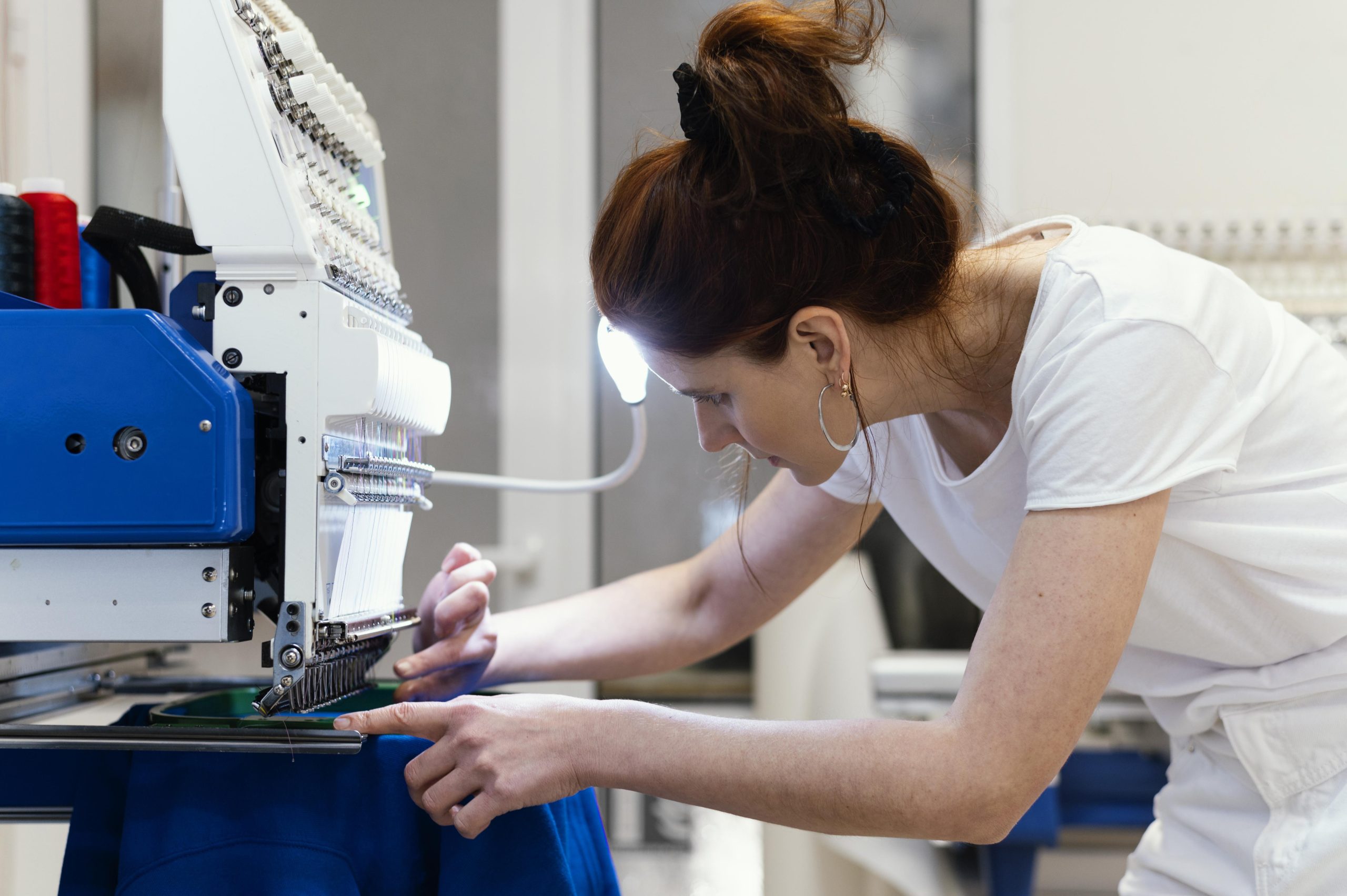
What is print on demand? Print on demand, often called POD, is a way of selling products where the product is made after a customer places an order. Instead of producing a large number of products and storing them before they are sold, a business can make products as customers buy them.
This simple idea has changed how many new brands, creators, artists, and online sellers approach product manufacturing. It allows a business to test new designs, offer more products, and reduce the need to keep large amounts of finished stock.
The print on demand market is also growing quickly. According to Grand View Research, the global print on demand market was valued at $10.8 billion in 2025. It is estimated to reach $13.1 billion in 2026 and is projected to grow to $57.5 billion by 2033, at a compound annual growth rate of 23.6%. Apparel was the largest product category in 2025, making up 39.5% of the market.
But what exactly does print on demand mean? How does it work? What products can you sell? And is it a good way to start a clothing brand or online business?
Let's start with the basics.
What Is Print on Demand?
Print on demand is a business model where products are manufactured after a customer places an order. The product can be customized with a design, artwork, text, logo, or other content before it is made and shipped to the customer.
In simple terms, you do not have to make hundreds of finished products before you start selling them.
Instead, the basic process is:
Customer places an order → Product is made → Product is checked → Product is packed → Product is shipped
This is what makes print on demand different from traditional manufacturing.
Let's start with the basics.
Print on Demand Meaning
The term print on demand has two simple parts: "print" and "on demand.
Print refers to adding a design or other artwork to a product. For example, a design can be printed on a T-shirt, hoodie, tote bag, mug, or poster.
On demand means the product is made when there is a demand for it. In a typical POD model, production starts after a customer places an order.
For example, imagine that you create a T-shirt design.
With traditional manufacturing, you might produce 100 T-shirts first, store them, and then try to sell them.
With print on demand, you can list the T-shirt for sale first. When a customer orders one, the product is produced, checked, packed, and shipped.
So, the biggest difference is when the product is made.
Print on Demand in Simple Words
Think of print on demand as making products when people buy them instead of making a large stock of products and waiting for people to buy them.
Here is a simple comparison:
For example, a clothing brand may create 20 different T-shirt designs.
With traditional production, the brand might make a large quantity of every design. If only three designs sell well, the brand could be left with a lot of unsold stock.
With print on demand, the brand can offer the designs for sale and produce them as orders come in.That does not remove every business risk.
However, it can reduce the risk of producing large quantities of products before knowing what customers want.
What Products Can Be Sold With Print on Demand?

Print on demand is not limited to T-shirts.
Depending on the manufacturer, businesses can sell many types of customizable products, including:
T-shirts
Oversized T-shirts
Polo T shirts
Hoodies
Sweatshirt
Crop tops
T-shirt dresses
Apparel is especially important in the POD industry. Grand View Research estimates that apparel accounted for 39.5% of global print on demand market revenue in 2025, making it the largest product segment.
This is one reason print on demand has become closely connected with online clothing brands and custom merchandise.
Is Print on Demand Only About Printing?
Not exactly.
The word "printing" can make POD sound like it is only about putting a design on a product. In reality, print on demand is also about how a product is produced and fulfilled after an order is received.
For a clothing brand, for example, the process may include:
Blank apparel → Design printing → Quality check → Packing → Shipping
So, a print on demand business is not simply buying a blank T-shirt and printing a design on it.
The complete customer experience also depends on the product quality, printing quality, order processing, packaging, and delivery.
This is important because the customer does not only buy the design. They buy the finished product.
A Simple Example of Print on Demand
Imagine you start a clothing brand called XYZ Clothing.
You create a graphic design and put it on a T-shirt. You list that T-shirt on your online store for ₹799.
A customer visits your store and places an order.
You do not necessarily need to have that exact printed T-shirt sitting in your warehouse.
Instead, the order can be sent to your print on demand manufacturing partner. The T-shirt is then produced with your design, checked for quality, packed, and shipped to your customer.
The process looks like this:
You create the design → You list the T-shirt → Customer places an order → T-shirt is manufactured→ T-shirt goes through quality checking→ T-shirt is packed → T-shirt is shipped to the customer
That is print on demand.
The Simple Definition of Print on Demand
Print on demand is a business model where products are made after customers order them, instead of producing large quantities of finished products in advance.
This model can help brands and creators test products, offer customized designs, and sell without taking on the same level of finished-inventory commitment as traditional manufacturing.
The exact costs, production process, delivery time, and level of inventory needed can still vary from one POD manufacturer to another.
How Does Print on Demand Work?
Now that we know what print on demand means, the next question is simple: how does print on demand actually work?
The process starts with a product idea and ends when the finished product reaches the customer. In between, there are several steps, including product selection, design, order processing, manufacturing, quality checking, packing, and shipping.
The exact process can vary between POD manufacturers. However, the basic flow usually looks like this:
Choose a product → Create a design → List the product → Customer places an order → Product is made → Quality check → Packing → Shipping
1. Choose a Product
First, you choose the product you want to sell.
For a clothing brand, this could be a T-shirt, oversized T-shirt, polo, hoodie, sweatshirt, or another apparel product.
You may need to decide:
The right product depends on your target customer and the type of brand you want to build.
For example, a streetwear brand may choose oversized T-shirts and hoodies, while a fitness brand may focus on T-shirts, joggers, and sweatshirts.
2. Create Your Design
Next, you create the design that will go on your product. This could be:
You also decide where the design should appear.
For example, a T-shirt could have a design on the front, back, chest, or sleeve. At this stage, it is important to think about the product and the design together.
A design that looks good on a computer screen may not always look good on the actual product.
3. Create and List the Product
Once the product and design are ready, you create the product listing on your online store or selling channel.
A good product listing usually includes:
At this point, the customer sees the product as a finished item that they can buy.
4. A Customer Places an Order
The next step is the most important part of the POD model.
A customer places an order for your product.
For example: 1 oversized T-shirt × ₹799 = ₹799 order value
The order contains the information needed to produce and fulfill the product.Depending on the setup, the order can then be sent automatically or manually to the POD manufacturer.
This means you do not have to wait until you have a large number of orders before production begins.
5. The Product Is Manufactured
Once the order reaches the manufacturer, the product is prepared for production.
For apparel, this can involve selecting the correct blank garment, size, and color before applying the customer's chosen design.
Different printing methods can be used depending on the product, fabric, design, quantity, and required finish. Common methods include:
The best printing method is not the same for every product. For example, a detailed full-color artwork may require a different process from a simple one-color logo.
6. The Product Goes Through Quality Checking
Manufacturing does not end when the design is printed. The finished product should be checked before it is sent to the customer.
Quality checks may look for:
7. The Product Is Packed
This step matters because the customer expects the product they ordered, not simply a product that was produced quickly.
After the product passes the required quality checks, it is packed for delivery. Good packaging protects the product during transportation and also forms part of the customer's experience with the brand.
For a clothing brand, this is also an opportunity to create a consistent brand experience through packaging, labels, inserts, or other brand elements.
8. The Order Is Shipped
Finally, the packed order is handed over to a shipping partner.
The product then travels from the fulfillment facility to the customer's delivery address. The total delivery time can depend on several factors, including:
Production time + Processing time + Shipping time
This is why brands should not look at shipping time alone when estimating when a customer will receive an order.
The main idea is simple: production follows demand.
That is what makes the POD model different from producing large quantities of finished products before customers place orders.
Print on Demand vs Traditional Manufacturing
The biggest difference between print on demand and traditional manufacturing is when production happens and how inventory is managed.
In traditional manufacturing, a business usually produces products before customers buy them.
For example:
For example:
Manufacture 1,000 T-shirts → Store them → Sell them over time
With print on demand, the process is closer to:
List the product → Customer orders → Manufacture the product → Ship it
This difference can have a major effect on how a business manages its money, inventory, products, and risk.
Print on Demand vs Traditional Manufacturing: Key Differences
Is Print on Demand Cheaper Than Traditional Manufacturing?
Not necessarily.
This is an important point for anyone considering POD. Traditional bulk manufacturing can often reduce the cost per unit because many products are produced together.
For example, producing 10,000 identical products can be more cost-efficient per unit than producing one product at a time.
POD has a different advantage.
You may be able to avoid committing large amounts of money to finished products before you know whether customers will buy them.
So, the comparison is not simply: POD = cheap or Traditional manufacturing = expensive
Instead, it is about cost versus flexibility versus inventory risk. A business needs to choose the model that matches its demand and stage of growth.
When Is Traditional Manufacturing Better?
Traditional manufacturing can make sense when:
For example, an established clothing brand that regularly sells thousands of units of the same product may benefit from bulk manufacturing.
When Is Print on Demand Better?
POD can make sense when:
For a new brand, this flexibility can be especially useful. You can test a product with real customers before deciding whether it deserves larger production.
Can a Business Use Both Models?
Yes. A business does not always have to choose one model forever.
For example, a clothing brand could use print on demand while testing a new design.
Suppose the brand launches a new T-shirt and receives 20 orders.The design performs well.
The brand may then decide to move that product into larger-batch manufacturing because demand is now easier to predict. This creates a possible path:
Test with POD → Find winning products → Forecast demand → Move high-volume products to bulk production
The right choice can therefore change as a brand grows.
How Much Does Print on Demand Cost?
One of the first questions people ask after learning about print on demand is how much does print on demand cost?
There is no single price. The total cost depends on the product, printing method, number of print areas, packaging, shipping, taxes, payment fees, and other business expenses.
A simple way to look at the cost is:
Product cost + Printing cost + Packaging + Shipping + Taxes and fees = Total fulfillment cost
For example, imagine you sell a printed T-shirt.
If you sell the T-shirt for ₹799, the difference is: ₹799 - ₹350 = ₹449
However, ₹449 is not automatically your profit. You may still have other expenses. These can include:
Therefore, a POD business should always calculate its total cost per order, rather than looking only at the product price.
What Determines the Cost of a Print-on-Demand Product?
Several factors can change the final cost.
Product
A basic T-shirt will usually have a different base cost from a heavyweight oversized T-shirt or hoodie.
Printing method
Different printing methods have different costs. The method also depends on the fabric, design, quantity, and print requirement.
Print placement
A product with one print may cost less than one with prints on the front, back, chest, and sleeves.
Quantity
POD is designed around smaller, demand-based production. However, larger order volumes can sometimes make other manufacturing models more cost-efficient because of economies of scale.
Packaging
Basic packaging and branded packaging can have different costs.
Shipping
Shipping cost depends on factors such as package weight, destination, shipping method, and delivery service.
Taxes and fees
Depending on where and how you sell, taxes, payment processing charges, marketplace fees, and other charges can affect your final margin.
Is Print on Demand Expensive?
Print on demand can have a higher cost per product than large-scale bulk manufacturing.
That is because bulk manufacturing can spread production costs across a large number of units. However, the comparison should not stop at the unit price.
Suppose you manufacture 1,000 T-shirts at once.
Your cost per T-shirt may be lower.
But you also need to pay for 1,000 T-shirts before you have sold them.With POD, you may pay more per item, but you can avoid committing the same amount of money to a large quantity of finished products upfront.
So the real question is not simply:
"Which model has the lowest product cost?"
It is:
"Which model gives my business the right balance of cost, flexibility, and inventory risk?"
How Do You Calculate Print-on-Demand Profit?
A simple profit calculation is:
Profit = Selling price - Total business cost
For example:
Selling price: ₹799
Product and fulfillment: ₹300
Advertising: ₹200
Payment and other variable fees: ₹30
Estimated profit = ₹799 - ₹300 - ₹200 - ₹30 = ₹269
This is why a product that looks profitable at first may have a much smaller final margin after all expenses are included.
A good POD business tracks the complete economics of every order.
Is Print on Demand Profitable?
Yes, print on demand can be profitable.
However, print on demand itself does not guarantee profit. The opportunity is significant. Research and Markets estimates that the global print on demand market was worth $10.8 billion in 2025 and could reach $57.5 billion by 2033, representing a projected CAGR of 23.6% between 2026 and 2033.
The apparel segment alone was valued at approximately $4.26 billion in 2025 and is projected to grow at a 23.7% CAGR from 2025 to 2033.
These figures show that the market is growing. However, market growth does not mean every individual POD store will make money.
Your profitability depends on your own numbers.The business still needs customers, good products, sensible pricing, reliable fulfillment, and effective marketing.
What Affects Print-on-Demand Profit?
1. Selling price
The amount customers are willing to pay directly affects your margin. A ₹799 T-shirt and a ₹1,299 T-shirt can have very different profit potential, even if their production costs are similar.
However, a higher price only works when customers believe the product is worth it.
2. Product cost
Your manufacturing cost directly affects your margin.
This is why comparing suppliers only on their base product price can be misleading. You need to consider the complete fulfillment cost.
3. Shipping cost
Shipping can have a large effect on your final profit.
A product may have a healthy product margin but become much less profitable after shipping is added.
4. Customer acquisition cost
Getting an order is not free.
If you spend ₹200 on advertising to acquire a customer, that ₹200 needs to be included when calculating your profit.
5. Returns and replacements
Returns, refunds, replacements, and failed deliveries can reduce your actual earnings.
Therefore, your business should track these costs over time instead of ignoring them.
6. Repeat customers
A customer who buys from you several times can be more valuable than a customer who purchases only once.
For example, if your first order costs ₹200 to acquire through advertising but the customer returns three more times without the same acquisition cost, your overall customer economics can improve.
7. Product demand
A great margin means little if nobody wants the product.Your designs, product quality, audience, and brand positioning all affect demand.
What Is a Good Profit Margin for Print on Demand?
A good profit margin for a print-on-demand (POD) business typically ranges from 20% to 40% after covering all expenses.
However, there is no universal profit margin that works for every POD business.
The right margin depends on your product, audience, positioning, marketing costs, shipping, return rate, and other expenses.Instead of chasing a fixed percentage, calculate your actual contribution per order.
For example:
Selling price: ₹999
Total variable costs: ₹620
Contribution before fixed business expenses: ₹379
This number gives you a more useful picture of what each order contributes to the business.
As your order volume grows, you can then look at your monthly fixed costs and calculate your actual net profit.
Can You Make Money With Print on Demand Without Buying Inventory?
Yes. That is one of the biggest reasons people choose POD. You can create a product, make it available for sale, and have it produced after a customer orders it.
However, this does not mean you can start without spending any money. You may still need money for:
So, a better way to describe POD is : It can reduce the need for large upfront finished-product inventory. It does not make starting a business completely free.
What Are the Benefits of Print on Demand?
Print on demand has become popular because it solves a very specific problem: How do you sell products without committing to a large amount of finished inventory before you know what customers want?
That makes the model especially useful for new brands, creators, artists, and businesses testing new products. Here are some of its biggest benefits.
1. Lower Inventory Risk
This is one of the biggest advantages of POD. You do not have to produce hundreds or thousands of finished products before you start selling. Instead, products can be made based on incoming demand. For a new clothing brand, this can reduce the risk of being stuck with a large quantity of products that do not sell.
2. Lower Upfront Inventory Investment
Traditional bulk manufacturing can require a business to pay for a large quantity of products upfront.
POD changes the timing of that expense. Instead of investing heavily in finished inventory first, the manufacturing cost is linked more closely to actual orders.
This can make it easier for a new business to test an idea without putting a large amount of money into stock.
3. Easier Product Testing
Suppose you have 10 T-shirt designs. You do not know which design customers will prefer. With POD, you can make the designs available and observe which ones receive orders. If one design performs well, you can focus more attention on it. If another does not sell, you can replace it.
This makes POD useful for testing demand before committing to larger production quantities.
4. More Product Variety
POD can make it easier to offer different designs, colors, products, and collections without holding a large quantity of every finished variation.
For example, a clothing brand can test several designs across different T-shirt colors before deciding which combinations deserve larger production runs.
5. Less Finished-Product Storage
If products are produced after orders are received, you may not need to keep a warehouse full of finished products.
That can reduce the space needed for finished stock.
However, storage requirements still depend on the manufacturing setup and the products being sold.
6. Useful for New Clothing Brands
Starting a clothing brand traditionally can involve many decisions about product quantities, sizes, colors, and designs. That creates a forecasting problem.
For example, if you produce: 5 designs × 4 colors × 6 sizes × 20 pieces you already have: 2,400 pieces before knowing exactly which combinations customers want.
POD can reduce this risk by allowing a brand to test demand before committing to such large quantities.
7. Useful for Creators and Artists
Creators can turn their artwork, slogans, illustrations, or community ideas into physical products without building their own manufacturing facility.
For example, a creator could launch a small merchandise collection and produce products as orders arrive.
This allows the creator to focus more on their audience and content while a manufacturing partner handles production and fulfillment.
8. Easier to Test New Collections
Established brands can also use POD. A brand could test a limited collection, seasonal design, or new product category before deciding whether it deserves larger-scale production. This can make experimentation less risky.
9. Flexible for Changing Demand
Customer preferences can change quickly. A design that sells today may not sell six months from now.
Because POD is based on producing products according to demand, businesses can change their product selection without necessarily being left with a large quantity of finished products.
The flexibility is particularly useful for brands that regularly introduce new designs.
10. Can Support Business Growth
As a brand gets more orders, it can review which products are performing well. Over time, the business can use those sales patterns to make better production decisions.
For example: Test product → Track sales → Identify winners → Increase production efficiency → Scale
This means POD does not have to be the final manufacturing model for every product. It can also be a way to discover which products deserve larger investments.
The Biggest Advantage of Print on Demand
If we had to reduce all these benefits to one idea, it would be this:
Print on demand allows businesses to test and sell products with less reliance on large quantities of finished inventory upfront.
That flexibility is valuable. However, it is only one side of the story.POD also has disadvantages, including potentially higher per-unit costs, dependence on manufacturing quality, and the need to manage delivery and customer expectations.We will look at those limitations next.
What Are the Disadvantages of Print on Demand?
Print on demand can make starting and testing a product business easier. However, it is not perfect.
Like any business model, POD has some limitations. Understanding them before starting can help you make better decisions and avoid common mistakes.
1. Higher Cost Per Product
One of the biggest disadvantages of POD is that the cost per product can be higher than bulk manufacturing. When a factory produces a large number of identical products, the cost of producing each item can fall.
With POD, products may be made in smaller quantities, sometimes one order at a time.For example, producing 50 identical T-shirts can be more cost-efficient per piece than producing 5 T-shirts with different designs.
This means you may have to accept a higher cost per product in exchange for lower inventory risk and greater flexibility.
2. Lower Margins at Low Selling Prices
Because your product and fulfillment costs can be higher, selling at a very low price can make it difficult to maintain a healthy margin.
For example, if your complete fulfillment cost is ₹450 and you sell the product for ₹499, you have only ₹49 left before other business expenses.
That ₹49 may not cover advertising, payment fees, returns, customer support, or other costs.Therefore, pricing is especially important in POD.
3. Less Control Over the Manufacturing Process
When you manufacture products yourself, you have direct control over the production process.
With a POD partner, part of that process is handled by another company.This means you need to choose your manufacturing partner carefully.
Things such as product quality, printing quality, production speed, packaging, and order accuracy can affect your customers' experience.
4. Product Quality Can Vary
A design may look perfect on a computer but look different when printed on an actual product.
Problems can include:
That is why ordering samples before launching a product is important. A sample lets you check the actual product instead of relying only on digital mockups.
5. Production Takes Time
Print on demand does not mean instant delivery.
The product still needs to be manufactured, checked, packed, and shipped. The customer therefore waits for both production and delivery. This is different from selling a product that is already sitting in a warehouse and is ready to ship. Brands should communicate realistic delivery timelines to customers.
6. Shipping Can Affect the Customer Experience
A customer may not separate production time from shipping time. From their point of view, they simply ordered a product and are waiting for it to arrive. If production takes three days and shipping takes four days, the customer experiences the complete seven-day journey.
Therefore, businesses need to consider: Production time + Processing time + Shipping time = Total fulfillment time Faster production alone does not guarantee faster delivery.
7. Returns Can Be Complicated
Returns and replacements can create additional costs.
Depending on the product and reason for the return, you may need to manage: Replacement products, refunds, return shipping, damaged products, incorrect products, customer communication. A clear return policy can help customers understand what happens if there is a problem with an order.
8. You Still Need to Find Customers
This is one of the most important things beginners need to understand.
A POD manufacturer can make and ship your product. It does not automatically create demand for your brand.
You still need to attract customers through methods such as: social media, content marketing, search influencer partnerships, paid advertising, email marketing, creator marketing, community building.
POD solves part of the manufacturing problem. It does not solve the marketing.
9. Scaling Requires Manufacturing Capacity
POD can make it easier to start small.
However, what happens when your product suddenly receives hundreds or thousands of orders?
Your manufacturing partner needs enough raw materials, blank products, pPrinting capacity, staff, quality control capacity, packing capacity, shipping capacity.
Therefore, choosing a POD partner is not only about handling today's orders.It is also about understanding whether the partner can support your future growth.
10. You May Have Less Control Over Costs
Costs can change because of product prices, shipping rates, packaging requirements, taxes, or other operational factors. This means businesses should regularly review their product economics. A product that was profitable six months ago may have a different margin today if its costs have changed.
Who Can Use Print on Demand?
Print on demand is not limited to one type of business. It can be used by anyone who wants to sell customized or made-to-order products and does not want to build the entire manufacturing process themselves.
Clothing Brands
New clothing brands can use POD to launch products without committing to large quantities of finished stock.
This can be especially useful when demand is difficult to predict.
For example, a new brand can launch a small collection, track sales, and then decide which products deserve larger production runs.
Creators and Influencers
Creators can use POD to turn their audience into customers. A creator may sell t-shirts, hoodies, mugs, tote bags, posters and other merchandise.
The products can carry the creator's artwork, logo, phrases, or other brand elements.
Artists and Designers
Artists can turn their work into physical products. Instead of printing hundreds of copies of an artwork, they can make it available for purchase and produce it according to demand.
Entrepreneurs
POD can also be useful for people testing their first business idea. For example, someone may have an idea for a niche clothing brand but may not know which designs will sell. POD can provide a way to test that idea before moving into larger-scale manufacturing.
Small and Medium Businesses
Businesses can use POD for branded products such as:
Employee T-shirts
Event merchandise
Promotional products
Customer merchandise
Limited collections
Established D2C Brands
POD is not only for beginners. Established brands can use it to test:
New designs
New product categories
Seasonal collections
Limited drops
Niche products
If a new product performs well, the brand can later consider larger-batch production.
Content Communities
Online communities can also use POD to create products around shared interests.
For example, a niche community may want merchandise that represents a particular interest, hobby, profession, or lifestyle.
The smaller the niche, the more important it becomes to understand whether enough people are willing to buy.
How to Start a Print-on-Demand Business
Starting a print-on-demand business does not require you to build your own printing factory or purchase a large amount of finished inventory.
However, you still need to make a few important decisions before you start selling.
The basic process is:
Choose your niche → Select products → Create designs → Find a manufacturing partner → Set your prices → Create your store → Launch → Market your products → Track your results
Choose a Niche
First, decide who you want to sell to. Your niche could be based on an interest, lifestyle, profession, community, or customer need.
For example:
A clear niche makes it easier to decide what products to create and how to market them.
Choose Your Products
Next, decide what you want to sell.
For a clothing brand, this could be T-shirts, oversized T-shirts, hoodies, sweatshirts, polos, or other apparel.
You do not need to launch a large collection immediately.
Starting with a focused product range can make it easier to understand what your customers actually want.
Create Your Designs
Your designs are a major part of your brand.
They should match your audience, product, and overall brand identity. You can create designs yourself, work with designers, or use artwork that you have the legal right to sell.
Find a Manufacturing Partner
Your manufacturing partner will have a major effect on your customer's experience. Look at factors such as:
Do not choose a partner only because it has the lowest price. A reliable manufacturing process can be just as important as the product cost.
Set Your Prices
Before deciding your selling price, understand your complete cost.
This includes the product, printing, packaging, shipping, taxes, payment fees, marketing, and possible returns.
Your price should leave enough room for the business to operate and grow.
Create Your Store and Launch
Once your products are ready, you need a place where customers can see and purchase them. Your store should clearly communicate:
Then you can launch your products and start attracting customers.
Test, Learn, and Improve
Your first collection does not need to be perfect. Watch what happens after launch.
Which products get orders?
Which designs get attention?
Which products are returned?
Which marketing channels bring customers?
Use these answers to improve your next collection.
The goal of starting with POD is not to create hundreds of products immediately. It is to find products that customers actually want and then build from there.
Is Print on Demand Good for Beginners?
Yes, print on demand can be a good option for beginners, especially when demand is uncertain and you do not want to commit to large quantities of finished products.
The main reason is simple. A beginner may not know which products customers will buy.
With traditional bulk manufacturing, making the wrong product can leave you with a large amount of unsold stock.
With POD, you can start with a smaller collection and learn from actual customer demand.
Why Beginners Choose Print on Demand
POD can be useful for beginners because it can offer:
However, POD does not mean that starting a business is easy.
You still need to find customers.
You still need good products.
You still need to understand pricing.
And you still need to provide a good customer experience.
Is POD Risk-Free for Beginners?
No. POD can reduce inventory risk, but it does not remove business risk.
You can still lose money through:
So, POD should be viewed as a lower-inventory way to build and test a product business, not as a guaranteed way to make money.
Is Print on Demand Worth It?
Print on demand can still be worth exploring, particularly for businesses that want to test products, create customized merchandise, or reduce their dependence on large quantities of finished inventory.
The market itself continues to grow. Grand View Research estimates that the global print-on-demand market was worth $10.8 billion in 2025. It estimates the market at $13.1 billion in 2026 and projects it to reach $57.5 billion by 2033, representing a projected CAGR of 23.6% from 2026 to 2033.
The opportunity is also significant in India.
Is POD Right for Everyone?
No. POD may be a good fit if you value flexibility and want to test demand.
However, if you already have very high and predictable demand, traditional bulk manufacturing may offer better unit economics. The right choice depends on:
Demand + Order volume + Cash flow + Product type + Margins + Inventory risk
How to Choose a Print-on-Demand Partner
Your POD manufacturing partner plays an important role in your business.
They are responsible for producing the product your customer receives, so their performance can directly affect your brand.
However, choosing a partner should not be based on price alone. Consider these key factors:
Product quality: Check the fabric, construction, sizing, and overall finish.
Printing quality: Look at print clarity, durability, color, and placement.
Production time: Understand how quickly orders are processed and manufactured.
Shipping: Check delivery coverage, shipping options, and expected delivery times.
Product range: Make sure the partner offers the products, sizes, colors, and styles your brand needs.
Technology: If you sell online, integrations with your store can make order processing easier.
Quality control: Understand how products are checked before they are shipped.
Support: Reliable customer support becomes especially important when something goes wrong with an order.
Pricing: Compare the complete fulfillment cost rather than looking only at the base product price.
Always Test Before You Scale
Before sending a large number of customer orders through a new partner, order samples.
Check the actual product, printing, packaging, and overall experience. It is much easier to identify a problem with one sample than after hundreds of customers receive the product.
The right POD partner should fit your business, not simply offer the lowest price.
A detailed comparison of POD manufacturers, pricing, integrations, product quality, and fulfillment can be covered in a separate guide.
Common Print-on-Demand Mistakes
Print on demand can make starting a product business easier, but beginners can still make expensive mistakes.
Here are some of the most common ones.
1. Choosing Products Without Knowing the Customer
A product should be created for a specific audience, not simply because it is easy to manufacture.
2. Launching Too Many Products
More products do not automatically mean more sales. Starting with a focused collection can make testing and management easier.
3. Ignoring Product Quality
A good design cannot fix poor product quality. Always check samples before launching products.
4. Pricing Based Only on Manufacturing Cost
Your product price needs to account for more than manufacturing. Consider: Product + Printing + Shipping + Fees + Marketing + Returns
5. Skipping Samples
Digital mockups do not always show how the real product will look and feel. Samples help identify problems before customers do.
6. Choosing a Partner Only Because of Price
A cheaper product can become expensive if it leads to defects, delays, replacements, or unhappy customers.
7. Forgetting About Shipping
Customers care about when their order arrives, not just when it is produced.Always understand the complete fulfillment timeline.
8. Expecting POD to Generate Sales Automatically
POD handles production and fulfillment.You still need to build the brand, attract customers, create demand, and provide a good customer experience.
9. Not Tracking the NumbersRevenue alone does not tell you whether a POD business is profitable. Track your costs, margins, returns, advertising spend, and repeat purchases.
10. Trying to Scale Before Finding Product-Market Fit
It is better to understand what customers want before investing heavily in products that have not been tested.
The simplest way to avoid most POD mistakes is to start small, test carefully, track your numbers, and improve based on real customer demand.
Why Choose GetPrintX for Print on Demand?
Print on demand is more than printing a product and shipping it. For a growing brand, the manufacturing partner also becomes part of the day-to-day order, fulfillment, technology, and customer experience.
GetPrintX is an India-based print-on-demand manufacturing and fulfillment partner built for creators, clothing brands, and online sellers. Along with manufacturing and fulfillment, GetPrintX provides tools and integrations designed to make selling and managing POD products easier.
StudioShopX: Create Your Own Store for Free
With StudioShopX, creators and sellers can create their own online store without building a website from scratch. You can create a storefront, add products, showcase your designs, and start selling from one place.
This makes StudioShopX particularly useful for creators or first-time sellers who want to start selling without investing in a separate ecommerce website at the beginning.
Connect Your Existing Store
If you already have an ecommerce website, you do not need to create a new one. GetPrintX supports integrations with:
Shopify
WooCommerce
Wix
Zoho Commerce
This allows businesses to connect their existing store with their POD workflow and manage orders through an integrated setup.
Sell on Marketplaces
GetPrintX also supports marketplace selling, including Amazon integration, allowing sellers to connect their marketplace operations with their fulfillment workflow.
This can be useful for brands that sell through more than one channel.
Easy Migration
Already working with another POD provider?
GetPrintX provides an easy migration process for businesses that want to move their products and order operations to a new manufacturing partner.
The goal is to make changing providers less disruptive to an existing business.
Custom APIs for Order Placement
For businesses with their own technology or custom ecommerce setup, GetPrintX provides custom APIs for order placement.
This allows businesses to connect their systems directly with the fulfillment workflow instead of relying only on standard integrations.
This can be particularly useful for businesses with custom websites, applications, or larger order operations.
AI-Powered Design Tool
GetPrintX also provides a design tool that helps users create product designs.
This can be useful for creators and sellers who want to experiment with new product ideas without depending entirely on professional design software.
Cashbacks and Rewards
GetPrintX also offers cashbacks and rewards to help sellers get more value from their orders and ongoing relationship with the platform.
These programs can make a difference for brands that place regular orders and are looking to improve their overall fulfillment economics.
90-Day RTO Support
Returns to origin, or RTO, can become a significant challenge for ecommerce businesses, particularly when customers do not accept their orders.
GetPrintX provides 90-day RTO support, giving businesses additional support in managing returned orders and reducing the operational burden associated with RTO inventory.
More Than Just a Printing Partner
For a POD business, manufacturing is only one part of the equation. You also need:
Products + Printing + Technology + Order Processing + Fulfillment + Shipping + Support
GetPrintX brings these parts together through its manufacturing, ecommerce integrations, creator tools, fulfillment services, and seller-focused features.
For someone starting a POD business, the goal is not simply to find a company that can print a T-shirt.
The goal is to find a partner that can help manage the journey from customer order to delivered product as the business grows.
GetPrintX combines print-on-demand manufacturing with ecommerce integrations, fulfillment, creator tools, and seller-focused services to help businesses build and scale their product businesses from India.